
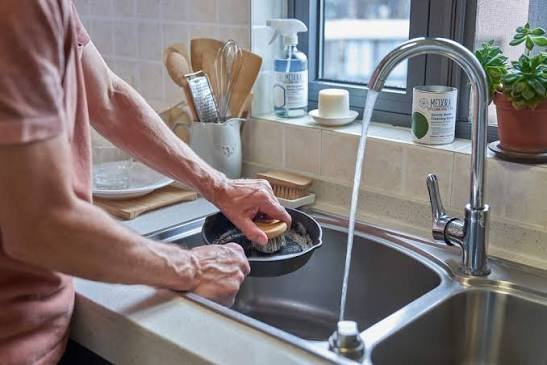
I’ll admit I was skeptical about eco-friendly cleaning products for a long time. Too many of them felt like marketing — nice packaging, vague promises, mediocre actual cleaning power. But after switching several things in my own home over the past year, some of these genuinely hold up against regular chemical cleaners. Others, honestly, don’t. Let’s separate the two.
Why Consider Switching at All
Beyond the environmental angle, a lot of eco-friendly cleaning products are simply gentler on skin, safer around kids and pets, and don’t leave that sharp chemical smell hanging in a closed room. For households with allergies or asthma, this can matter more than people initially realize.
Products That Genuinely Work
Direct answer: Vinegar, baking soda, and castile soap are the three eco-friendly cleaning staples that consistently perform as well as chemical alternatives for most household cleaning tasks — everything from degreasing to deodorizing.
1. White Vinegar
Excellent for descaling taps, showerheads, and kettles. Also works well as a glass cleaner when diluted with water. It won’t disinfect as effectively as bleach, so it’s not the right choice for, say, cleaning a toilet bowl after illness in the house.
2. Baking Soda
Great for scrubbing without scratching — works on stovetops, sinks, and grout. Mixed into a paste with water, it handles stubborn grime that regular soap struggles with.
3. Castile Soap
A plant-based soap that works as an all-purpose cleaner when diluted. Gentle enough for most surfaces, including wood, without stripping finishes the way some chemical cleaners can.
Where Eco-Friendly Products Fall Short
Direct answer: Natural cleaning products generally underperform chemical disinfectants when it comes to killing bacteria and viruses, so areas requiring true disinfection — bathrooms after illness, kitchen cutting boards used for raw meat — still benefit from occasional chemical disinfectant use.
This is the honest gap most eco-friendly product marketing doesn’t mention. For everyday cleaning, natural options work great. For genuine disinfection needs, they’re not always sufficient on their own.
Store-Bought Eco-Friendly Brands Worth Trying
Several Indian and international brands now offer plant-based, biodegradable cleaning lines. Look for:
- Products certified biodegradable, not just labeled “natural”
- Concentrated formulas — better value and less plastic packaging over time
- Fragrance-free options if anyone in the household has sensitivities
DIY Eco-Friendly Cleaning Recipes
- All-purpose spray: 1 part white vinegar, 1 part water, a few drops of essential oil for scent
- Grout paste: Baking soda mixed with a small amount of water until it forms a spreadable paste
- Glass cleaner: Equal parts water and vinegar, applied with a microfiber cloth for a streak-free finish
- Drain freshener: Baking soda followed by vinegar, left for 15 minutes, then flushed with hot water [link to related guide about common plumbing problems here]
Cost Comparison: Eco-Friendly vs Regular Cleaners
Making your own eco-friendly cleaners from vinegar, baking soda, and castile soap generally costs 40-60% less per use than buying branded chemical cleaners, since these base ingredients are cheap and go a long way when diluted properly.
What to Avoid Buying (Marketing Overreach)
Not everything labeled “eco-friendly” deserves the premium price tag. Be cautious of products that:
- List “natural fragrance” without specifying ingredients
- Cost significantly more without a clear certification backing the claim
- Promise disinfectant-level results without any supporting data
FAQ
Q: Are eco-friendly cleaning products as effective as chemical ones? For general cleaning, yes. For disinfection against bacteria and viruses, chemical options still perform better.
Q: Can I make eco-friendly cleaners at home cheaply? Yes — vinegar, baking soda, and castile soap cover most household cleaning needs at a fraction of branded product costs.
Q: Are eco-friendly products safe for homes with pets? Generally safer than chemical alternatives, though it’s still worth checking specific ingredients, as some essential oils can irritate pets.
Q: Do eco-friendly products have a shorter shelf life? Some DIY versions do, since they lack preservatives — make smaller batches and use within a few weeks.
Q: Is vinegar safe to use on all surfaces? No — avoid using it on natural stone like marble or granite, as the acidity can etch and dull the surface over time.
Conclusion
Eco-friendly cleaning products aren’t a complete replacement for every cleaning need, but for most day-to-day household cleaning, they genuinely hold their own — and cost less over time. Start by swapping out one or two regular cleaners for a vinegar or baking soda-based alternative and see how it performs in your own home before switching everything at once.
Suggested Alt Text:
- “Vinegar and baking soda used as eco-friendly cleaning ingredients”
- “DIY all-purpose cleaning spray in reusable glass bottle”
- “Castile soap being used to clean kitchen countertop”