Water problems have a way of showing up at the worst possible time. A restaurant owner notices stubborn scale on kitchen equipment just before a busy weekend. A workshop finds that mineral deposits are affecting its machinery. At home, someone spends another Saturday scrubbing orange stains from a bathroom sink, wondering why they keep coming back.
These situations might seem unrelated, but they often have one thing in common: the water isn’t quite right for the job. And while it can be tempting to install the first filter that promises a quick fix, the better approach is to understand what’s causing the problem before spending money on a solution.
Water treatment doesn’t have to be complicated. With suitable testing, the right equipment, and a little attention to maintenance, many common water quality concerns can be managed effectively.
Why Water Quality Matters in Commercial Settings
For a business, water is often part of the daily operation rather than a background convenience. Restaurants use it for food preparation, washing, and cleaning. Hotels depend on it for guest rooms, laundry, and kitchens. Manufacturing facilities may rely on consistent water quality for cooling, processing, or equipment operation.
When the water contains excessive hardness minerals, scale can accumulate inside pipes, boilers, heating elements, and other equipment. Sediment may clog valves or interfere with sensitive processes. Iron and manganese can leave stains, while certain dissolved substances may affect taste, odor, or product quality.
The impact depends on the industry and the severity of the issue. A small deposit around a faucet might be little more than an annoyance in one setting, but buildup inside a frequently used commercial system can contribute to maintenance needs and interruptions.
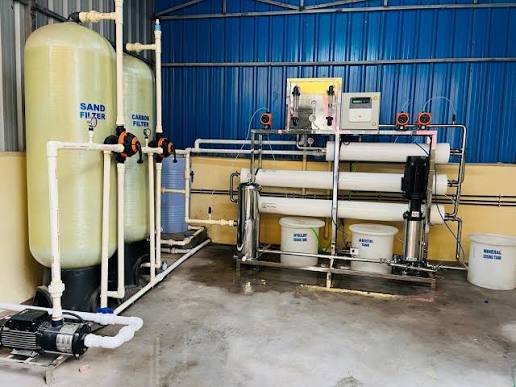
This is where business & commercial solutions become particularly useful. A well-planned treatment system takes account of water demand, operating hours, equipment requirements, and the quality standards relevant to the business. Rather than treating every problem the same way, it focuses on what the water needs to do and what could happen if its quality isn’t suitable.
Identify the Cause Before Choosing Equipment
One of the most common mistakes in water treatment is assuming that every visible problem has the same cause. White deposits are often associated with hardness, but stains, cloudy water, unusual odors, and unpleasant tastes can have different explanations.
Testing provides a more reliable starting point. Depending on the water source and the symptoms, useful measurements may include hardness, pH, iron, manganese, total dissolved solids, and other relevant characteristics. Where health-related concerns exist, appropriate laboratory testing may also be necessary.
For businesses, the testing plan should reflect how water is used. A commercial kitchen may need to consider drinking-water safety and equipment scale, while a production facility may require additional analysis related to its process. Private wells and other independent sources can also change over time, making periodic checks worthwhile.
Once the results are available, it becomes easier to compare treatment methods. A sediment filter may be appropriate for suspended particles, while a softener can reduce hardness minerals. Activated carbon may improve certain tastes and odors, and specialized systems may be needed for particular dissolved contaminants.
The goal isn’t to buy the most elaborate setup. It’s to identify the actual issue and choose a treatment method that can address it reliably.
Managing Difficult Water Conditions
Some water quality problems require more than a standard filter. High iron levels, persistent odors, unusual mineral content, and elevated dissolved solids may call for specialized treatment equipment selected for the source and operating conditions.
For example, iron can sometimes be managed through oxidation and filtration, but the appropriate method depends on its form, concentration, pH, and other water characteristics. Sulfur-related odors may require a different approach. Water with elevated dissolved solids may need membrane treatment or another suitable technology, depending on the substances involved.
These are the situations where problem water solutions need careful assessment rather than guesswork. A system designed for one contaminant may have little effect on another, even if both cause unpleasant changes in the water.
It’s also important to distinguish aesthetic issues from potential health risks. A strange smell deserves investigation, but smell alone cannot establish whether water is safe. Likewise, clear water isn’t proof that it is free from harmful contaminants. Testing should guide the response, particularly when the water is used for drinking, cooking, or food production.
For businesses, getting the treatment choice right can help reduce avoidable maintenance and provide greater consistency. It also prevents the frustration of installing equipment only to discover that the original problem remains.
Match the System to Your Daily Water Demand
A treatment system should fit the way a property actually uses water. This sounds obvious, yet capacity is easy to overlook when comparing products.
A small office may have modest demand, while a hotel, restaurant, or industrial facility can experience substantial peaks throughout the day. If equipment cannot handle the required flow rate, water pressure or availability may suffer. An oversized system, meanwhile, may add unnecessary purchase and operating costs.
Before selecting equipment, consider average daily consumption, peak demand, available installation space, drainage requirements, and the quality of the incoming water. If treated water is needed for a particular process, identify the relevant quality targets rather than assuming that general-purpose filtration will be sufficient.
Maintenance arrangements matter just as much. Ask how often filters need changing, whether membranes require scheduled replacement, and what servicing the system needs. A dependable setup is one that continues to perform after installation, not simply one that looks impressive on delivery day.
Where operations cannot easily stop, businesses should also discuss backup arrangements and service response times. Even a brief interruption can be inconvenient when water is essential to daily work.
Don’t Overlook Replacement Parts and Accessories
Treatment equipment contains components that gradually wear out, collect sediment, or lose effectiveness. Filters become loaded with particles, seals can deteriorate, and membranes may eventually need replacement. Pumps, valves, connectors, and monitoring components also require attention depending on the system.
Having access to suitable replacement parts & accessories can make routine maintenance much easier. Before buying a treatment unit, check whether compatible parts are readily available and whether the manufacturer provides clear service instructions. Choosing a system solely because it has a low upfront price may prove costly if essential components are difficult to source.
Keep a record of installation dates, maintenance work, and replacement schedules. For a business with several treatment units, a simple maintenance log can help staff plan service visits before problems interrupt operations.
It’s worth checking for leaks, unusual noises, changes in pressure, and unexpected shifts in water quality. These signs don’t always indicate a serious fault, but they deserve attention before a minor issue becomes a larger one.
Replacement schedules should follow the manufacturer’s guidance and actual operating conditions. A filter used heavily in a high-sediment environment may need attention sooner than one in a lightly used system.
Think About Long-Term Costs, Not Just the Purchase Price
The initial price is only one part of the investment. Installation, electricity, water consumption, replacement filters, treatment chemicals, and professional servicing can all affect the total cost over time.
For instance, reverse osmosis systems can reduce many dissolved substances, but they also produce a wastewater stream. Softeners require regeneration and typically use salt or potassium chloride. Other technologies may need periodic media replacement or additional monitoring. The best option depends on the water quality, the required outcome, and the property’s operating conditions.
Ask suppliers to explain expected maintenance costs and the performance limits of their equipment. Look for independently certified claims where applicable, and make sure the certification covers the particular substances you need to reduce.
A clear, realistic proposal is more useful than a broad promise that one system will solve every water problem.
A Better Water System Begins With a Clear Plan
Water quality can affect comfort, equipment reliability, cleaning routines, and business operations. Yet solving a problem doesn’t necessarily require a complicated installation. Often, the most effective approach begins with a test, a practical assessment, and a treatment method chosen for a specific purpose.
Whether you’re responsible for a commercial kitchen, a manufacturing site, an office, or a property with persistent staining and scale, start by finding out what’s in the water. Compare solutions based on verified performance, capacity, maintenance needs, and long-term cost.
Then make ongoing care part of the plan. Regular inspections and timely servicing help equipment perform as intended and make unexpected problems easier to manage.
Good water treatment isn’t about buying the biggest system on the market. It’s about making an informed decision that fits your needs today and remains practical to maintain tomorrow. When the water works as it should, the benefits often appear in the everyday details: smoother operations, less frustrating maintenance, and more confidence in the systems you depend on.