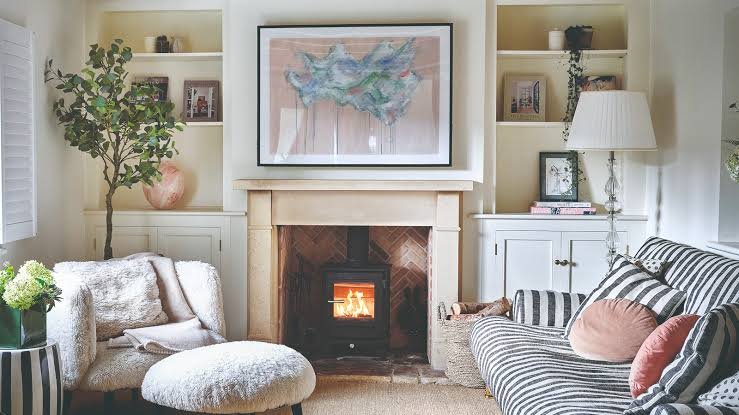
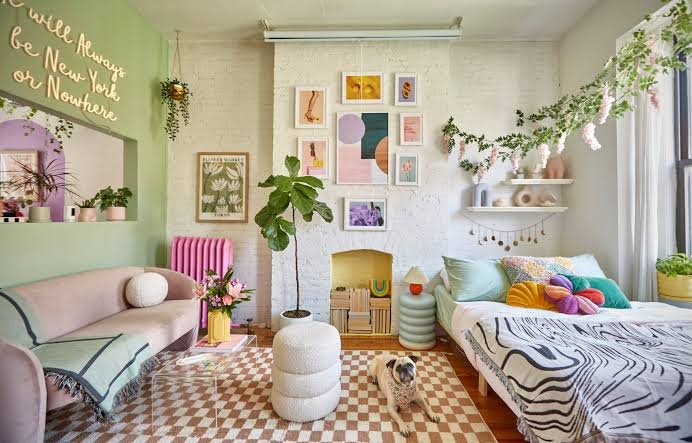
A lot of small homes feel cramped not because they’re actually tiny, but because of how they’re decorated. Good small space decorating ideas can make a compact room feel noticeably more open, using tricks that cost far less than knocking down walls.
I’ve lived in a genuinely small flat for a few years now, and honestly, most of the “feels bigger” effect came from rearranging and rethinking what was already there — not buying anything expensive.
Use Vertical Space, Not Just Floor Space
Direct answer: One of the most effective small space decorating ideas is drawing the eye upward through tall shelving, floor-to-ceiling curtains, or vertical wall art, since this creates a perception of higher ceilings and more overall volume, even when floor area stays the same.
Wall-mounted shelves instead of bulky floor cabinets free up visible floor space while still providing storage — a genuinely practical trade-off for small homes.
Mirrors Aren’t Just Decoration
A well-placed large mirror, especially opposite a window, reflects light and visually doubles the perceived depth of a room. This is one of the oldest small space decorating ideas, and it still works because it’s based on how light and reflection genuinely affect our perception of space.
Choose Furniture That Does Double Duty
Direct answer: Multi-functional furniture — storage ottomans, extendable dining tables, sofa beds — reduces the total furniture footprint needed in a small space, which directly translates to more visible open floor area and a less cluttered feel.
A storage ottoman that serves as both seating and hidden storage does the work of two separate pieces of furniture while taking up the space of one.
Keep a Consistent Color Palette
Too many colors and patterns in a small room create visual chaos that makes the space feel busier and smaller than it is. Sticking to 2-3 coordinated colors throughout — walls, furniture, textiles — creates a calmer, more cohesive look that reads as more spacious.
Light Colors Still Matter, But Aren’t Mandatory
While light walls do help open up a room, it’s not an absolute rule. A well-lit small room in a rich, darker tone can still feel intentional and cozy rather than cramped, as long as lighting is planned thoughtfully alongside the color choice [link to related guide about how to choose paint colors here].
Declutter Ruthlessly
Direct answer: Visual clutter has a disproportionately large impact on how small a space feels, meaning that decluttering surfaces and storing items out of sight often improves perceived room size more than any furniture rearrangement or decor change.
This is the least glamorous small space decorating idea, but arguably the most effective one, and it costs nothing beyond effort.
Use Furniture with Visible Legs
Furniture that sits flush to the floor (like a low platform sofa) can actually make a room feel more closed in than pieces with visible legs, which let light and floor space show through underneath. This small detail makes a bigger visual difference than most people expect.
Layer Lighting Instead of One Overhead Fixture
A single bright overhead light flattens a room and makes boundaries feel more obvious. Layering ambient, task, and accent lighting — a floor lamp here, under-shelf lighting there — creates depth and makes a small space feel more dynamic and less boxed-in.
Zone Without Walls
For studio apartments or open-plan small homes, using a rug, a bookshelf, or a change in lighting to visually “zone” different functions (sleeping area, work area, living area) creates a sense of distinct spaces without needing actual walls, which would only make the space feel more divided and smaller.
Common Mistakes in Small Spaces
- Buying furniture sized for a showroom display, not the actual room dimensions
- Pushing all furniture against walls, which sometimes leaves an awkward, unused center space
- Overcrowding with too many small decor pieces instead of a few larger, intentional ones
- Skipping curtains or using short ones that cut visual height
FAQ
Q: Do small rooms always need light-colored walls? No — while lighter colors generally help open up a space, a well-lit room in a darker tone can still feel intentional rather than cramped.
Q: What’s the cheapest small space decorating idea? Decluttering — it costs nothing and often has the biggest visible impact on how spacious a room feels.
Q: Are mirrors really effective for making rooms feel bigger? Yes — a well-placed mirror, particularly opposite a window, genuinely reflects light and adds visual depth to a small room.
Q: Should furniture be pushed against walls in small rooms? Generally helpful for maximizing open floor space, though it’s not an absolute rule if the room’s layout works better otherwise.
Q: How much does small space decorating typically cost? Many of the most effective ideas — decluttering, rearranging, adding a mirror — cost very little; a modest full refresh with some new pieces usually runs ₹15,000-₹40,000.
Conclusion
Good small space decorating ideas aren’t about buying more — they’re often about using what you have more thoughtfully, keeping clutter down, and playing with light and vertical space. Start with decluttering and one strategically placed mirror this week; both are free or cheap changes that make a noticeable difference before you spend on anything else.
Suggested Alt Text:
- “Small living room decorated with vertical shelving and mirror”
- “Multi-functional storage ottoman in compact apartment”
- “Layered lighting setup in small studio apartment”